Workers' Comp for Environmental Remediation Crews
By Contractors Choice Agency
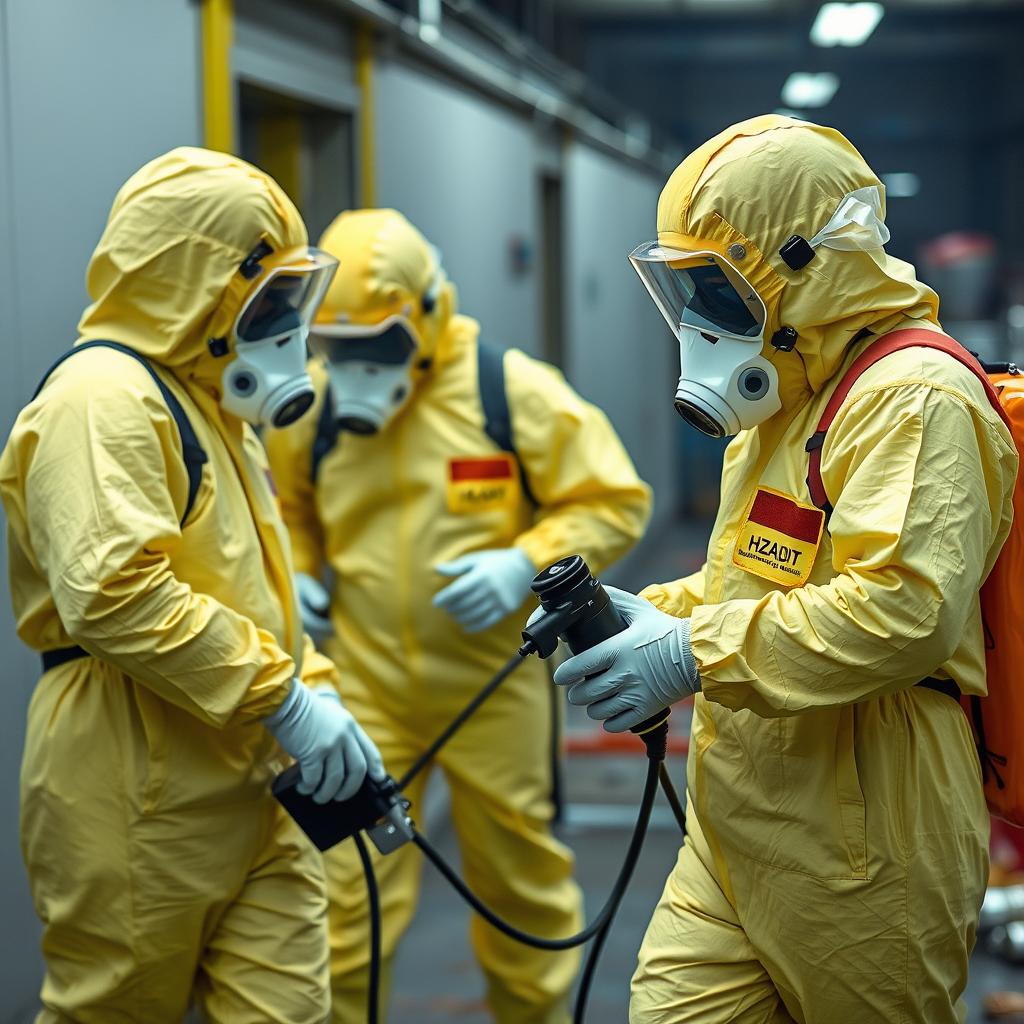
Environmental remediation is among the most hazardous categories of contractor work. Your crews excavate contaminated soil, work in chemically complex environments, enter confined spaces, wear encapsulating suits in summer heat, and handle materials that most contractors never encounter. Workers' compensation for environmental remediation crews needs to reflect that reality — not treat your hazmat technicians like they're doing light landscaping work.
The Right Class Code: 8868 Environmental Remediation
Workers' compensation underwriting depends on accurate class coding. The primary code for environmental remediation workers is NCCI class code 8868 — Environmental Remediation. This code covers workers engaged in:
- Soil excavation and contaminated soil removal
- Hazmat handling and hazardous material removal
- Underground storage tank removal and LUST remediation
- Brownfield site cleanup and grading
- Groundwater remediation operations
Workers misclassified under generic construction codes (like 5403 — Carpentry) or even general excavation codes carry lower premium rates that don't reflect the actual chemical exposure and hazmat risk. That creates an audit surprise at year-end and potential coverage disputes at claim time.
Additional codes may apply to your operation:
- 8601 — Engineer or architect (field supervisors with professional credentials)
- 7219 — Trucking — environmental hauling operations
- 8810 — Office and clerical employees
We assign codes to your actual workforce categories so your premium is correct from day one.
OSHA 29 CFR 1910.120: HAZWOPER Requirements
OSHA's Hazardous Waste Operations and Emergency Response (HAZWOPER) standard — 29 CFR 1910.120 — is the regulatory framework governing workers at hazardous waste sites. Compliance is relevant to both your legal exposure and your workers' comp underwriting.
Key requirements:
Initial training: Workers at Superfund sites and other RCRA/CERCLA-regulated hazardous waste operations require 40-hour initial HAZWOPER training before working on-site unsupervised. On-site supervisors require an additional 8 hours of supervisor training.
Annual refresher: Workers who have completed 40-hour initial training must complete an 8-hour annual refresher to maintain their certification.
Site-specific health and safety plan (HASP): Every hazardous waste site operation requires a written HASP before work begins. The HASP documents hazard assessment, PPE requirements, air monitoring protocols, decontamination procedures, and emergency response.
Workers' comp underwriters want to see documented HAZWOPER training for your workforce. It demonstrates risk management and directly affects your experience modification factor over time.
Level A, B, C, and D PPE: What Your Crew Actually Wears
HAZWOPER defines four levels of personal protective equipment based on site hazard:
Level A — Highest protection. Fully encapsulating chemical-resistant suit, self-contained breathing apparatus (SCBA), double gloves, chemical-resistant boots. Required when the highest level of skin, respiratory, and eye protection is needed. Maximum heat stress risk.
Level B — High respiratory protection with splash protection. SCBA plus chemical-resistant coveralls (not fully encapsulating), inner and outer gloves, boots. Used when the highest level of respiratory protection is needed but skin hazard is lower.
Level C — Air-purifying respirator with splash protection. Full-face air-purifying respirator plus Tyvek or equivalent coveralls, gloves, boots. Used when air contamination is known and the air-purifying filter can handle it.
Level D — Standard work uniform. No respiratory protection required. Site coveralls, safety glasses, hard hat. Used in areas with no known chemical hazards.
Most remediation field work is done at Level C or B. Level A is reserved for the highest-hazard environments. Level upgrades during excavation — when previously unknown contamination is encountered — are common.
Chemical Exposure and Dermal Contact Injuries
The injury patterns in remediation work are different from standard construction. Chemical exposure claims — dermal contact with petroleum hydrocarbons, TCE, PCE, benzene, or heavy metals — are a significant category.
Symptoms of chemical exposure often appear after the exposure, not during it. Benzene exposure leading to bone marrow issues, TCE exposure and kidney effects, petroleum-derived dermatitis — these are claims that can develop weeks or months after the incident. Workers' comp covers those occupational disease claims when they arise from the work environment.
Proper air monitoring — photoionization detectors (PIDs), photoionization detector alarms, direct-reading instruments — and documented decontamination procedures are both HAZWOPER requirements and underwriting considerations.
Confined Space Entry
Many remediation activities involve confined space entry: utility vaults, petroleum storage tank interiors, excavations deeper than 4 feet, stormwater structures. OSHA 29 CFR 1910.146 requires permit-required confined space procedures for spaces that contain or have the potential to contain a serious hazard.
Confined space injuries — entrapment, atmospheric hazards (oxygen deficiency, toxic gases), engulfment — carry high severity. A properly implemented confined space program with:
- Entry permits documenting hazard assessment
- Atmospheric testing before and during entry
- Trained attendants and rescue capability
- Lockout/tagout of energy sources
...reduces both the injury frequency and the claim severity. Underwriters look favorably on documented confined space programs.
Heat Stress in Encapsulated Suits
Level A and B PPE prevents the body from shedding heat through sweating and convection. In summer conditions — or any environment above 70°F — encapsulated suit work creates serious heat illness risk.
OSHA and NIOSH heat stress guidelines require:
- Work/rest schedules adjusted for heat conditions and suit type
- Hydration protocols
- Cooling stations and ice water available at the decontamination line
- Medical monitoring during Level A/B work
- Buddy system so heat illness symptoms are recognized quickly
Heat illness claims — heat exhaustion, heat stroke — carry significant workers' comp costs, particularly when a worker requires hospitalization. A documented heat stress management plan and trained site supervisors who recognize early heat illness symptoms are essential.
What Workers' Comp Underwriters Need From You
When we quote your remediation workers' comp, we'll ask for:
- HAZWOPER training records for your workforce
- HASP templates or a sample site-specific HASP
- Job descriptions for each worker category
- Annual payroll by job category (not lumped under one code)
- Loss history for the past 3–5 years
- Experience modification factor from your current carrier
Get the coverage your crew's work actually requires. Call us at 844-967-5247 to start the conversation.
Need this coverage for your environmental remediation business?
Get a real quote in about 15 minutes — we shop A-rated specialty environmental insurance markets.