Commercial Auto for Hazmat and Remediation Contractors
By Contractors Choice Agency
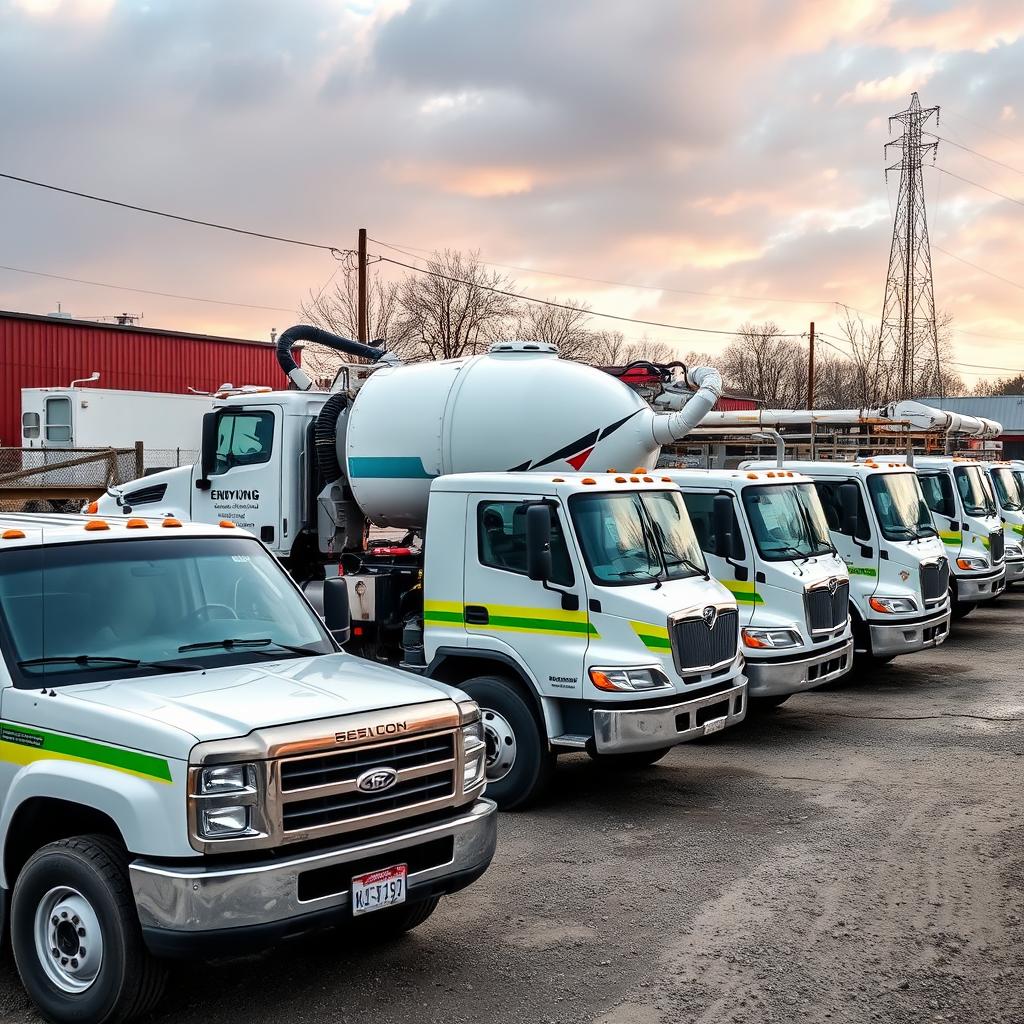
Environmental remediation contractors don't drive ordinary work trucks. They haul vacuum trucks loaded with contaminated slurry, transport equipment trailers with SVE systems and monitoring well tools, move drum loads of hazardous waste to licensed disposal facilities, and run crews to multi-state project sites across the country. Commercial auto for remediation contractors needs to reflect that reality.
Why Standard Contractor Auto Isn't Enough
Standard commercial auto policies cover liability and physical damage for listed vehicles. That's the baseline. For remediation contractors, the baseline isn't enough:
DOT/HAZMAT requirements: If your vehicles transport hazardous materials in quantities that trigger DOT placard requirements under 49 CFR Part 172, your drivers need commercial driver's licenses (CDLs) with HazMat endorsements — and your auto policy needs to reflect the hazmat exposure. A standard contractor auto policy written without understanding the hazmat transport may have exclusions or sublimits that gut the coverage when a transport incident occurs.
Specialty vehicles: Vacuum trucks, aquifer pump-and-treat units, mobile treatment systems, and specialized remediation equipment transport trucks aren't standard work trucks. Underwriters who don't understand remediation will misclassify them, leading to coverage disputes at claim time.
Multi-state operations: Remediation contractors often follow contamination regardless of state lines — a Superfund project in one state, a brownfield in another. Your auto policy's radius of operation needs to reflect your actual geographic footprint.
Cargo and CPL coordination: Contaminated materials in transit create both a cargo coverage question and a pollution liability question. Commercial auto covers the vehicle; CPL covers the contamination release. These need to coordinate without gaps.
49 CFR and DOT HazMat Compliance
Title 49 of the Code of Federal Regulations governs the transportation of hazardous materials on public roads. The key sections for remediation contractors:
49 CFR Part 172 — Hazardous Materials Table. If the material you're transporting is listed in the Hazardous Materials Table and you're transporting it in sufficient quantity, you have placarding and labeling requirements.
49 CFR Part 383 — CDL requirements. Drivers transporting hazardous materials in quantities requiring placards must hold a CDL with a HazMat endorsement. The HazMat endorsement requires Transportation Security Administration (TSA) background check clearance.
49 CFR Part 387 — Minimum liability insurance for motor carriers. Carriers transporting regulated materials are required to maintain minimum levels of liability insurance evidenced by an MCS-90 endorsement on the auto policy.
The insurance implication: if your drivers transport placardable quantities of hazardous materials and your auto policy doesn't reflect that exposure, you have an underwriting representation problem that can affect coverage at claim time.
The MCS-90 Endorsement
The MCS-90 endorsement is a federal endorsement required of motor carriers that transport regulated commodities under Federal Motor Carrier Safety Administration (FMCSA) jurisdiction. The endorsement provides minimum public liability coverage of $1M for carriers transporting hazardous materials — regardless of other policy terms, exclusions, or conditions.
What that means in practice: the MCS-90 can trigger coverage for a claim that the auto policy would otherwise exclude — but then the carrier has subrogation rights against you to recover what it paid. The MCS-90 is a public protection mechanism, not a carrier gift.
If your remediation operation qualifies as a regulated motor carrier under 49 CFR Part 390, the MCS-90 endorsement is required. We determine whether your operations trigger the requirement and add the endorsement when needed.
Vacuum Trucks and Specialty Vehicles
Vacuum trucks — used for removing contaminated liquids, slurry, and non-aqueous phase liquids (NAPL) from remediation sites — are among the most specialized and highest-value vehicles remediation contractors operate. They require:
- Correct vehicle classification and stated value
- Coverage that accounts for the hazardous materials the tank may contain during transit
- Physical damage coverage at replacement cost (vacuum trucks are expensive)
- Coordination with CPL for pollution incidents during vacuum truck operations
Other specialty vehicles common in remediation:
- Mobile groundwater treatment trailers: Portable air strippers, activated carbon treatment units, ion exchange systems — these may be classified as equipment rather than vehicles but still move on public roads.
- Drill rigs on trailers: Used for monitoring well installation, soil boring, and vapor probe installation.
- Equipment trailers: Pulling SVE units, generator sets, decontamination stations.
Each of these has specific coverage considerations. We get the vehicle schedule right from the start.
Equipment Trailers and Inland Marine Coordination
When specialized remediation equipment is mounted on or pulled by a vehicle, the coverage question splits:
The vehicle is covered under commercial auto (liability for accidents, physical damage to the tow vehicle).
The equipment may be covered under inland marine/tools and equipment coverage rather than commercial auto — especially for detachable equipment like SVE systems, groundwater sampling equipment, or air monitoring stations.
The gap to watch: if your tractor-trailer is hauling a $150,000 SVE system and the trailer rolls, who pays for the SVE unit? If the equipment isn't listed on the auto policy as cargo and isn't covered under an inland marine floater, the answer may be nobody.
We coordinate commercial auto and tools and equipment coverage so the vehicle, the trailer, and the equipment are all covered without gaps.
Multi-State Radius and Interstate Operations
Remediation contractors who work across state lines need auto coverage that reflects their actual radius of operations. Standard commercial auto policies typically have a radius of operations listed — if you're operating beyond that radius regularly, you have a potential coverage issue.
For contractors working on multi-state Superfund projects or government environmental remediation contracts, we structure coverage with a nationwide radius. We also verify that your commercial auto coordinates with your workers' comp (which needs to cover employees in every state you operate) and your CPL (which needs to cover contamination incidents regardless of state).
Getting Your Remediation Auto Coverage Right
Call us at 844-967-5247 and tell us about your vehicle fleet — vacuum trucks, work trucks, equipment trailers, specialty vehicles — and where you operate. We'll build a commercial auto program that reflects your actual exposure, meets your DOT requirements, and coordinates with your CPL and tools and equipment coverage so there are no gaps when a transport incident happens.
Need this coverage for your environmental remediation business?
Get a real quote in about 15 minutes — we shop A-rated specialty environmental insurance markets.